Practice-focused app giving real-time pitch and timing feedback
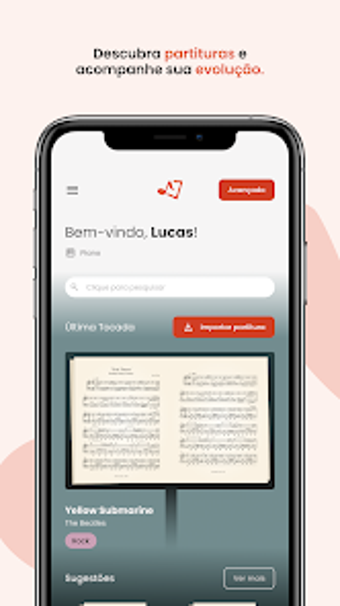
Musiway listens to your playing and offers live feedback on timing, intonation, and note accuracy while you practice or perform. Developed by DIGA Desenvolvimento de Softwares for Android devices, the app combines an interactive sheet music library with AI-assisted imports. It includes progress tracking, tempo adjustment, transposition, and support for 43 instruments, making it suitable for students, teachers, and performers who want objective session data to guide improvement.
Real-time feedback shapes practice with objective metrics
The app captures audio through the device microphone and compares performance to the digital score to report timing, intonation, and note accuracy. What's more, this listening-based analysis runs during play and labels deviations against the active score, so a student can see where rhythm and pitch diverge from the written part. The description lists support for 43 instrument types, which means the analysis adapts across wind, string, and keyboard timbres.
AI imports convert static scores into playable music
AI-powered PDF and XML import turns files into interactive scores, letting you move from paper to a digital, playable format. The source notes that manual adjustment may be required for complex pieces, which means the import is useful but not always flawless. The app accepts PDF and XML files up to a 5 MB size limit, placing a concrete boundary on the kinds of scans or exports you can bring in.
Practice workflow combines repertoire, tools, and session tracking
Musiway unifies a metronome, tuner, sheet reader, and performance tracker in one workspace, so you can organize a personal repertoire and log progress across sessions. Tempo adjustment and transposition are built in, and stored evolution data helps monitor improvement over time. What's more, the app offers dedicated features for teachers and students by keeping interactive scores and session reports together in the same library.
Device compatibility and limitations for offline use
The Android build runs locally but some cloud features need connectivity, as library syncing and cloud imports require an internet connection. Core practice and analysis tools operate without constant network access, so sessions don't depend entirely on connectivity. What's more, availability on iOS and iPadOS is mentioned, indicating cross-platform intent, though this review focuses on the Android experience.
In conclusion, a focused practice companion for musicians seeking measurable progress
Musiway suits students, educators, and performers who want data-driven practice: it records performance against the score, stores repertoire, and tracks sessions. It expects occasional manual cleanup after AI imports and relies on internet access for cloud features. For users who value live assessment and organized sheet libraries, the app provides a disciplined practice environment with clear limits around import size and cloud-dependent features.